 Quick Navigation
 All projects
  Hardware
 Links
Links Top projects
Alan numitron clock
Clapclap 2313/1386
SNES Pi Webserver
USB Volume/USB toys
Smokey amp
Laser cutter
WordClock
ardReveil v3
SNES Arcade cabinet
Game boy projects
cameleon
Home Presence Detector
 GitHub
AlanFromJapan
 Contact me

 Who's Alan?
Akizukidenshi
Elec-lab
Rand Nerd Tut
EEVblog
SpritesMods
AvrFreaks
Gameboy Dev
FLOZz' blog
Switch-science
Sparkfun
Suzusho
Datasheet Lib
Reddit Elec
Ermicro
Carnet du maker (fr)
repair - electric shaver battery cloning
Last update: Tue May 19 22:13:22 2026
My Hatteker shaver / trimer last replaceable battery died (or close enough). I loved this one, bought a second one: best cost/performance shaver I got. Can I make my own or just make it a wired-to-USB version? Both are ok for me, I don't shave in the shower anyway.
Presentation
Principle
Battery contains a 18650 Li-ion, and some circuitry (a TC4056A for charging, leds/caps). It has 3 pins, that ID as Battery+, Battery- and the third "IN+" as of the PCB. Just plug the B+/B- in the machine and it turns on a glimpse of a second (motor vibes) and immediately stops.Points of interrest
What happens is that the IN+ is a sensor pin to identify the battery as genuine. Protocol goes like this:There must be some circuitry in the battery hidden behind the power pins, because IN+ is not connected to anything, but I don't want to risk destructive maintenance (I have one barely functionning battery, it's useful to baseline with a working sample).
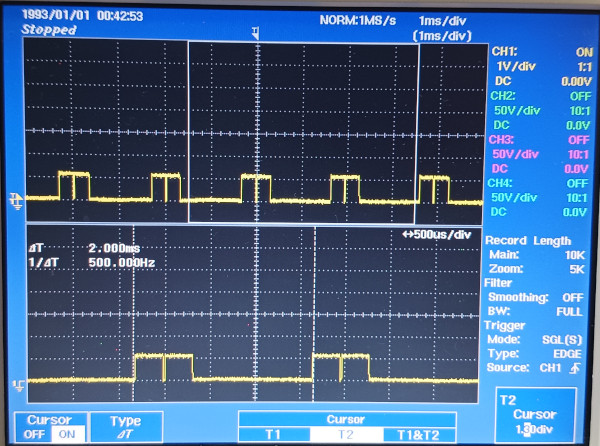
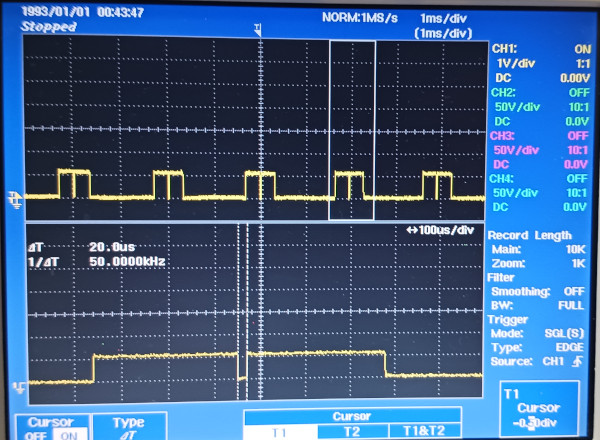
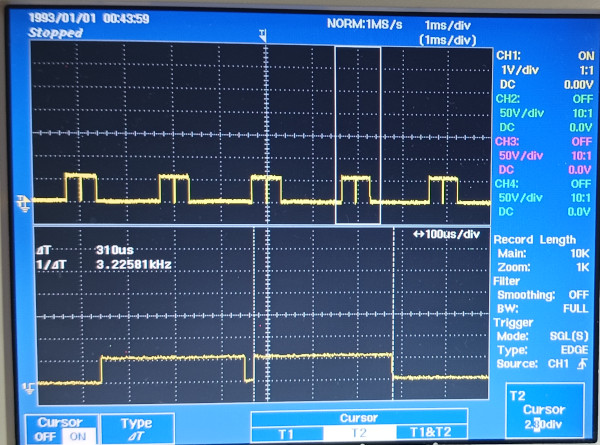
Implementation
Solution 1: cell replacement
Just replace the Li-Ion cell in the battery. Regular 18650 3.7v 1200mA. But where's the fun in that? Btw I will do that after I complete solution 3, but I don't want to risk killing the last barely-working battery I have at hand: I need it for the tests.Solution 2: direct motor drive
Yeah, just measure how much amps go in the motor and drive it? Motor is a Weilong FF-337PA, DC 3.7v at max 0.8A at full load for 6800 RPM (as per datasheet). But let's call this "last resort" solution in case I blow up the whole thing.Solution 3: battery emulation
Emulate the genuine battery!Assuming we will make it a wired version, USB 5V:
Schematics
WORKING circuit to detect signal with LM311
2 evenings discovering Comparators after noticing that it wouldn't work with LM358 (OpAmp) and it worked. Pretty happy to have discovered that puppy at the bottom of my "opamps & comparators" drawer, and happy first experience with comparator. And Mr. Dave Jones puts it as the first of the Jelly Beans comparators!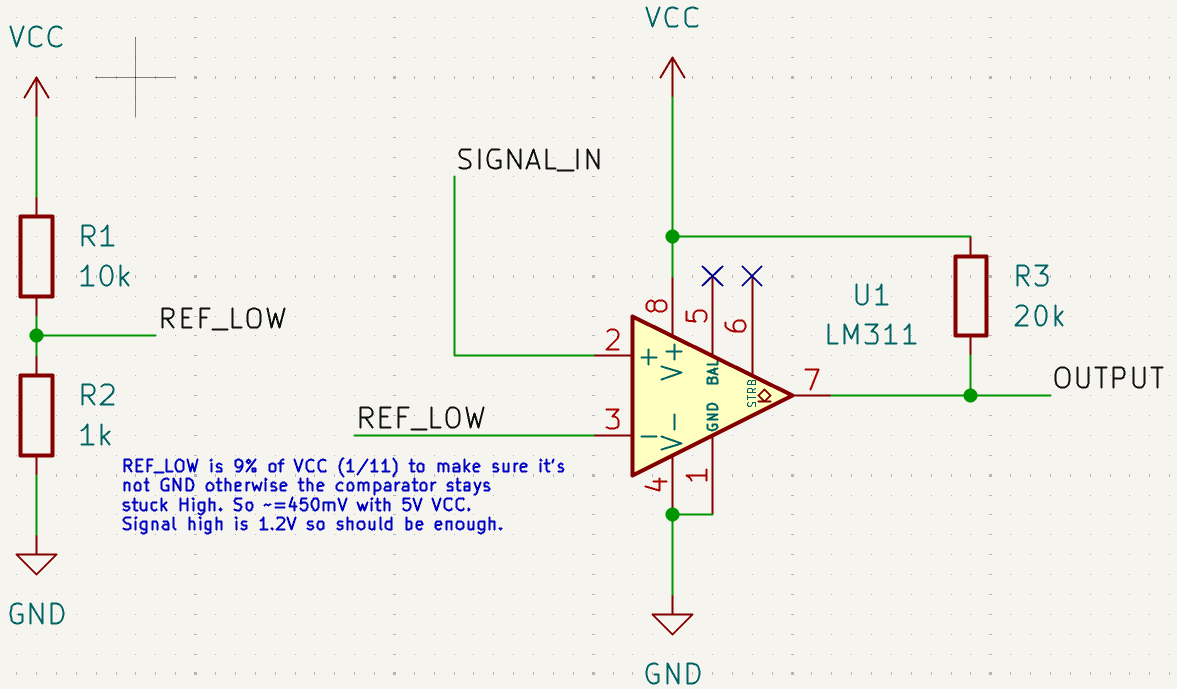
Driving the 1.2v from MCU
Use a 1.2v voltage reference (ICL8069) and drive it with a npn-transistor (or mosfet) should work: simulation on falstad.com.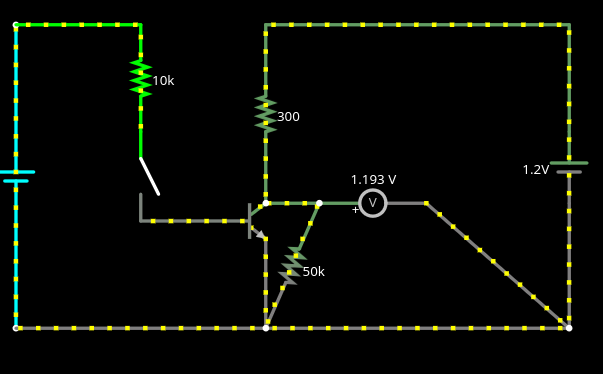
Source code
PCB and schematics:Pictures
Links
Helpful sources
Inspiration
electrogeek.tokyo ~ Formerly known as Kalshagar.wikispaces.com and electrogeek.cc (AlanFromJapan [2009 - 2026])